Supply Chain Security: Protecting Your SME from Third-Party Risk
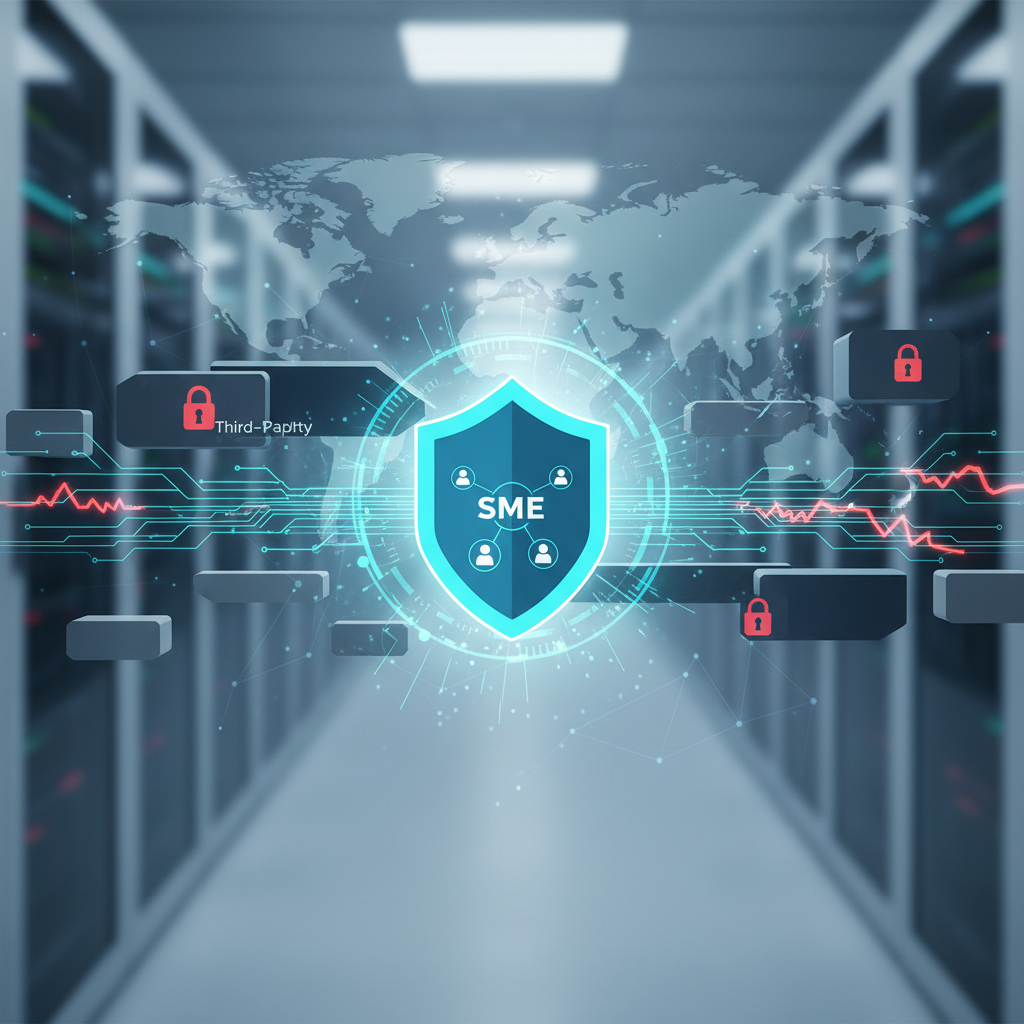
For many years, UK small and medium-sized enterprises (SMEs) operated under the assumption that if their own internal perimeter was secure, their data was safe. However, the threat landscape has shifted dramatically. Today, your business is only as secure as the weakest link in your digital supply chain. Whether it is a cloud-based accounting tool, a third-party payroll provider, or a remote IT support vendor, these external connections create pathways that cybercriminals are increasingly eager to exploit.
At Jibba Jabba, we have seen a rise in 'island hopping' attacks, where hackers breach a smaller, less-protected firm to gain access to a larger target or a wider network of clients. In this article, I want to move beyond basic internal hygiene and look at how you can practically manage third-party risks without the need for an enterprise-level security budget.
Understanding the Digital Supply Chain
When we talk about the 'supply chain' in a cyber context, we aren't just talking about physical goods. We are referring to every software provider, service partner, and digital platform your business interacts with. If you use a CRM, an email marketing platform, or even a smart building management system, you are part of an interconnected ecosystem. A vulnerability in any one of these can have a 'ripple effect' on your Doncaster-based business.
The Essential Third-Party Audit
You don't need a dedicated compliance officer to start vetting your partners. A simple, risk-based approach is often the most effective for SMEs. We recommend categorising your suppliers based on the level of sensitive data they can access.
- Critical: Any provider with access to personal customer data (GDPR regulated) or your financial accounts.
- High Risk: Technical partners with remote access to your internal network or servers.
- Low Risk: Service providers with no digital footprint in your systems (e.g., a physical cleaning company).
Once categorised, ask your 'Critical' and 'High Risk' partners for evidence of their security posture. Do they hold a Cyber Essentials or Cyber Essentials Plus certification? For UK businesses, this is the gold standard for basic security. If they don't have it, ask why. Simply asking the question often signals to a vendor that you take security seriously, which can lead to better service and accountability.
Securing Remote Access and API Connections
Many third-party risks stem from how these external entities connect to your network. If a vendor requires remote access to maintain your systems, ensure they are not using a permanent 'backdoor'.
Instead, we suggest implementing Just-In-Time (JIT) access. This means the connection is only opened when a specific task needs to be performed and is closed immediately afterward. Furthermore, ensure that any external connection requires Multi-Factor Authentication (MFA). At Jibba Jabba, we consistently find that unmanaged, non-MFA remote access accounts are one of the primary entry points for ransomware in UK small businesses.
Managing Software-as-a-Service (SaaS) Risks
Every time a member of your team signs up for a new 'freemium' tool using their work email, your supply chain grows. This 'Shadow IT' can lead to data leaks if those tools are breached. Establish a clear policy: no third-party software is to be used for company data without a brief security review and approval from your IT lead or managed service provider.
Contractual Protections and the GDPR
In the UK, the Data Protection Act 2018 and UK GDPR place a legal obligation on you to ensure that your data processors (your suppliers) handle personal data securely. Your contracts should include 'Right to Audit' clauses and clear requirements for breach notification. If a supplier is compromised, how quickly will they tell you? You shouldn't be finding out about a partner's data breach through a news report three weeks after it happened.
"Cyber security is no longer just about your own four walls; it is about the integrity of the entire web of partnerships that keep your business running."
Incident Response: When the Vendor Fails
What happens if your primary cloud storage provider goes offline, or your payroll software is hit by ransomware? A robust incident response plan must include 'Third-Party Outage' scenarios. Actionable steps include:
- Diversification: Avoid 'all your eggs in one basket' by ensuring critical data is backed up independently of the primary service provider.
- Communication Templates: Have draft emails ready for customers in case a third-party breach affects their data.
- Manual Workarounds: Identify which business processes can be performed manually if a digital partner goes dark for 48 hours.
How Jibba Jabba Can Help
Navigating third-party risk can feel like a full-time job, but it doesn't have to be. We help our clients by conducting vendor risk assessments, securing remote access gateways, and ensuring that all external integrations meet the highest security standards. Our team can help you build a 'security-first' culture that extends beyond your office and into your entire digital supply chain, giving you the peace of mind to focus on growth.
Frequently Asked Questions
Related Articles



Need Expert IT & Cyber Security Support?
Get in touch and our team will help you find the right solution.
Contact Us