Cloud vs On-Premise: The 2024 UK SME Infrastructure Dilemma
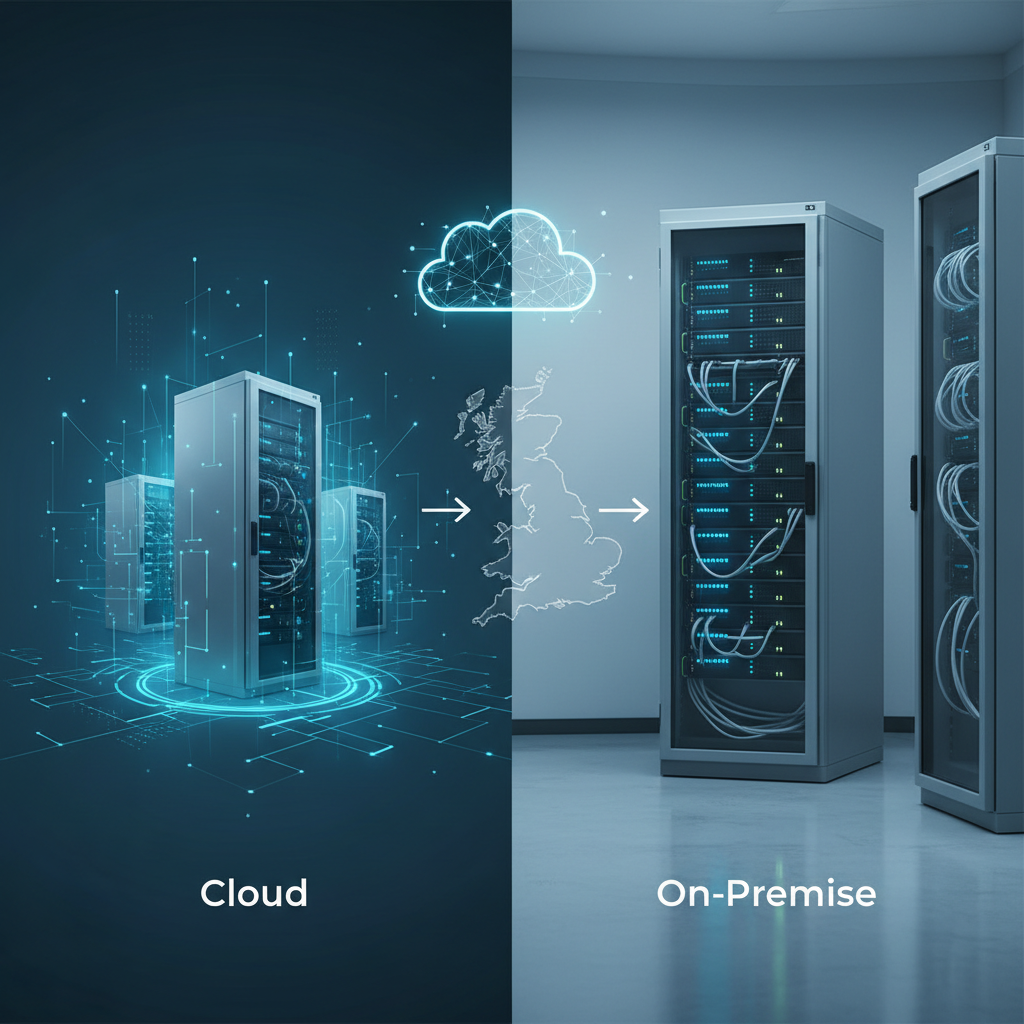
In my years leading Jibba Jabba here in South Yorkshire, I’ve sat across the desk from hundreds of business owners who all ask a variation of the same question: "Is it time to bin the server under the desk?" As we move deeper into 2024, the answer isn’t a simple yes or no, but rather a strategic decision based on your specific operational needs, your risk appetite, and your long-term growth plans. The infrastructure landscape for UK SMEs has shifted dramatically, moving away from high-capital hardware toward flexible, service-based cloud models.
Understanding the Infrastructure Shift
For a long time, the status quo for a British SME was a physical server room (or a very loud cupboard) housing hardware that depreciated the moment it was plugged in. Today, we are seeing a mass migration toward Cloud Infrastructure. But this transition isn't just about following a trend; it's about solving real-world business problems like remote access, scalability, and predictable monthly budgeting.
When we talk about infrastructure today, we're really looking at three distinct paths: On-premise, Public Cloud (like Microsoft Azure), and the Hybrid model. Each has its merits, but for most growing organisations, the hybrid approach often provides a sensible middle ground that bridges the gap between legacy systems and modern efficiency.
The Core Pillars of Modern IT Infrastructure
Making a decision about your IT backbone requires looking at four critical areas that will define your business's technical resilience over the next five years.
1. Server Virtualisation and Consolidation
Gone are the days when you needed a physical box for every primary application. Through virtualisation, we can run multiple 'virtual' servers on a single piece of high-performance physical hardware. This reduces energy costs—a significant factor given current UK utility rates—and simplifies management. If you aren't ready for a full cloud migration, virtualising your on-site environment is the first step toward modernising your infrastructure.
2. Business Continuity and Disaster Recovery (BCDR)
In the UK, we’ve seen a sharp rise in ransomware attacks targeting small businesses. Your infrastructure is only as good as your ability to recover it. A modern BCDR strategy moves beyond simple 'backups' to 'instant recovery.' We often advise clients to follow the 3-2-1 rule: three copies of your data, on two different media types, with at least one off-site. In a cloud environment, this recovery can happen in minutes rather than days, ensuring your doors stay open even if the worst happens.
3. The Role of Connectivity: Beyond Basic Fibre
Infrastructure is nothing without the pipes that connect it. As more UK businesses adopt cloud-first strategies, the pressure on the local area network (LAN) and wide area network (WAN) increases. We are seeing a significant move toward SD-WAN (Software-Defined Wide Area Networking) for multi-site businesses. This technology allows you to prioritise mission-critical traffic—like your VoIP calls or ERP software—over less important data, ensuring that your infrastructure performs consistently even during peak usage hours.
4. Security at the Edge
As your infrastructure spreads out from a central office to home offices and cloud data centres, the 'perimeter' of your business effectively disappears. We focus on securing the 'edge' of your network. This includes implementing robust firewalls with deep packet inspection and ensuring that every device connecting to your infrastructure, whether it's a laptop in Doncaster or a tablet in London, is vetted and secure.
Strategic Migration: A Phased Approach
One of the biggest mistakes I see is the 'lift and shift' approach, where a business tries to copy an outdated, messy on-premise setup directly into the cloud. This is often inefficient and expensive. Instead, we recommend a phased migration:
- Audit and Rationalise: Identify what data and applications you actually use. It’s the perfect time for a digital clear-out.
- Pilot the Cloud: Start with non-critical workloads or common services like email and file storage via Microsoft 365.
- Hybrid Integration: Keep high-demand legacy applications on-site while leveraging the cloud for backup and remote access.
- Optimise: Once in the cloud, use monitoring tools to ensure you aren't paying for resources you don't need.
"The goal of modern IT infrastructure isn't just to keep the lights on—it's to provide a platform that allows your team to work from anywhere, securely and without friction."
How Jibba Jabba Facilitates the Transition
At Jibba Jabba, we don't believe in a one-size-fits-all approach. We understand that a manufacturing firm in South Yorkshire has very different infrastructure needs than a digital marketing agency. Our role is to act as your technical architect. We help UK SMEs navigate these complex decisions, from selecting the right Azure instance to configuring your on-site firewall and managing your SD-WAN connectivity.
We focus on building infrastructure that is invisible. You shouldn't have to think about your servers or your network; they should simply be the reliable foundation upon which you build your business. Whether you are looking to retire your old server hardware or you want to harden your existing network against modern threats, we provide the expert guidance and local support to make it happen.
Final Thoughts for SME Owners
The next 18 months will be a turning point for many UK businesses. With the PSTN switch-off approaching and the continued evolution of remote work, your IT infrastructure is no longer a 'back-office' concern—it is a front-line business asset. Start by asking your IT provider for a clear roadmap of your current hardware's lifecycle and a genuine assessment of your disaster recovery capabilities. If the answer involves a USB stick and a prayer, it’s time for a more professional conversation.
Frequently Asked Questions
Related Articles



Need Expert IT & Cyber Security Support?
Get in touch and our team will help you find the right solution.
Contact Us